Almost a year ago, a former Russia specialist on the National Security Council warned Congress about Russia’s nefarious intentions in American politics. The goal of the Russians in 2016, Fiona Hill told the House Intelligence Committee, was to put whoever became president “under a cloud.”
Not only did the Russians succeed — it was overcast before President Donald Trump even took office — but they also managed to damage the credibility and reputation of the very agency that is supposed to protect against foreign interference in U.S. elections: the Federal Bureau of Investigation.
In her testimony last year, Hill warned that the opposition research commissioned by the Democratic Party against Trump and later used by the FBI to obtain a surveillance warrant against a campaign official named Carter Page would be a “perfect opportunity” for the Kremlin to inject disinformation into American political discourse. On Sept. 25, the Justice Department declassified documents that show the FBI investigated the primary source of the dossier for being a Russian agent.
One of those documents is a summary of the bureau’s investigation into a researcher at the Brookings Institution in 2009 and 2010. It says that in late 2008 he approached other researchers there who were joining the incoming administration of Barack Obama and asked if they wanted to make “a little extra money” once they were in their new positions and had access to classified information. The FBI later learned that in 2006 the primary source had contacts with “known Russian intelligence officers” at the Russian embassy in Washington.
In 2010, the FBI closed its investigation because the primary source “had apparently left the United States.” But the bureau left open the prospect of reopening the probe if the primary source ever returned to the U.S.
These facts alone are not dispositive. The former British spy who compiled the opposition research dossier on Trump’s campaign, Christopher Steele, has said that he is able to distinguish between real and fake information. It’s also possible that his source, the former Brookings Institution researcher, was acting as a kind of double agent.
That said, “much of the material” in Steele’s reporting could not be corroborated, wrote Justice Department Inspector General Michael Horowitz in his scathing 2019 report. “The limited information that was corroborated related to time, location, and title information, much of which was publicly available,” he said. When the Justice Department declassified the three-day interview with Steele’s primary source, it showed that he had disavowed much of the information in Steele’s dossier.
There were other signs that Steele was being played. Director of National Intelligence John Ratcliffe informed the Senate Judiciary Committee this week that the U.S. government received a report that Russian intelligence surmised in July 2016 that “Hillary Clinton had approved a campaign plan to stir up a scandal against U.S. Presidential candidate Donald Trump by tying him to Putin and the Russians’ hacking of the Democratic National Committee.” Ratcliffe says the intelligence community “does not know the accuracy of this allegation or the extent to which the Russian intelligence analysis may reflect exaggeration or fabrication.”
Nonetheless, it was important enough for then-CIA director John Brennan to brief the president about it, according to Ratcliffe, and for U.S. intelligence officials to forward an investigation referral to the FBI in September 2016. Earlier this year, the intelligence community declassified a series of footnotes to the Horowitz report that showed other U.S. intelligence officers had warned that Steele’s dossier may contain Russian disinformation.
One might expect the FBI’s leadership to be deeply embarrassed about all of this. People such as former FBI Director James Comey have been warning for years about the danger of Russia’s disinformation campaign against the public. The 2017 intelligence community assessment of Russia’s interference in the election of the previous year includes an entire section on Russia’s English-language propaganda station, RT.
But in a hearing on Wednesday before the Senate Judiciary Committee, Comey said he had no recollection that Steele’s primary source had been investigated for being a Russian spy or that U.S. intelligence officers referred the intelligence on Russia’s assessment of Clinton’s campaign strategy to the FBI.
None of this is to say that the FBI was colluding with Russia. Rather, it suggests that in their panic over the possibility of a Trump victory in 2016, FBI leaders — much like many cable news networks — embraced shoddy and now discredited intelligence to make a case against his campaign. The signs were there that Steele’s research was bunk, but the bureau ignored them.
None of this information gets Trump off the hook, either. He has aided and abetted Russian disinformation by repeatedly denying that Russia interfered in the 2016 election. This gives the Russians cover and encouragement to do it all over again this year, which is exactly what the intelligence community has been warning about.
In this respect, Trump himself, like the FBI, is a victim of Russian disinformation.
Eli Lake is a Bloomberg Opinion columnist covering national security and foreign policy. He was the senior national security correspondent for the Daily Beast and covered national security and intelligence for the Washington Times, the New York Sun and UPI.
Japanese police arrested a Marine lance corporal on suspicion of breaking into a home in Hiroshima city on Saturday night, according to the Marines and Hiroshima prefectural police.
Modernizing healthcare infrastructure also needs to include better ways to protect data Enterprises across a range of industries have digitally transformed over the years to upgrade business operations, realize higher growth potential and align better with emerging customer expectations. The healthcare industry in particular has been ahead of the curve and made dramatic changes over..
56% of companies say their remote workers actively bypassed security controls to obfuscate online activity
70% of the incidents included at least one attempt to circumvent a second security control to exfiltrate data without detection
72% of companies surveyed saw data theft attempts by a departing employee wanting to take protected IP with them
New research shows that the shift to an almost fully remote workforce has significantly changed the behaviors of trusted insiders in 2020. In a series of interviews with hundreds of businesses across a diverse range of industries, researchers found a 450% increase in employees circumventing security controls to intentionally mask online activities and a 230% increase in behaviors that indicate intent to steal data.
South Korea reported 73 new coronavirus cases on Monday, its fifth day of double-digit figures, but health officials warned the numbers may rise following a major holiday last week.
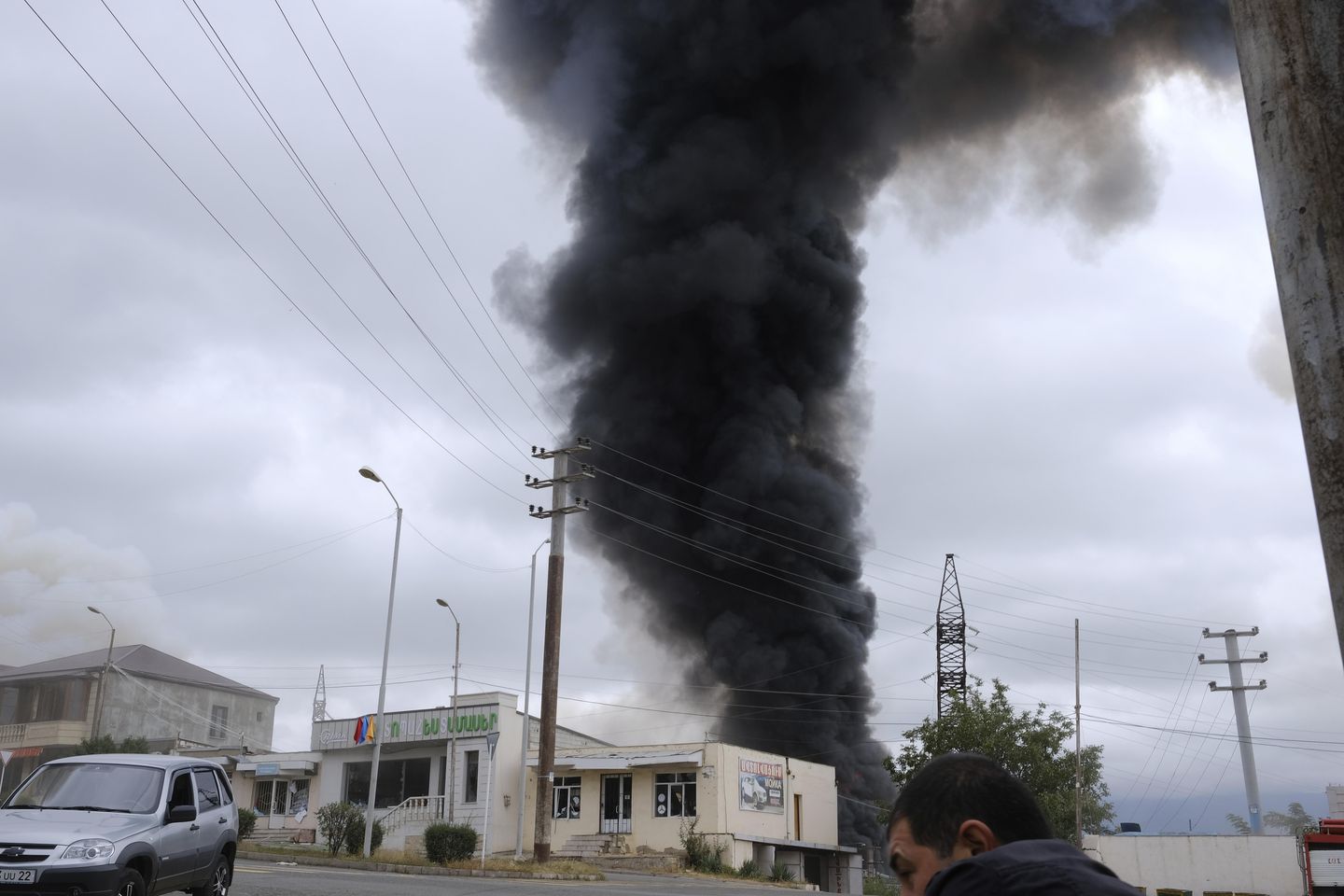
YEREVAN, Armenia (AP) - The fighting between Armenian and Azerbaijani forces over the separatist territory of Nagorno-Karabakh resumed on Monday morning, with both sides accusing each other of launching attacks.
Armenian military officials on Monday reported missile strikes hitting Stepanakert, the capital of Nagorno-Karabakh. The region lies in Azerbaijan ...
The fighting between Armenian and Azerbaijani forces over Nagorno-Karabakh spilled over the disputed regions borders Sunday.
Hikmet Hajiyev, an aide to Azerbaijani President Ilham Aliyev, said Armenian forces shelled Azerbaijans second-largest city of Ganja with heavy artillery and rockets, killing one person and injuring 32 others. Hajiyev also said Armenian forces also targeted the industrial city of Mingachevir and other smaller towns.
Hajiyevs claims were denied by Armenian defense forces, but Arayik Harutyunyan, the leader of the contested Nagorno-Karabakh, said in a post on Facebook that his forces targeted military objects in Ganja before he ordered them to stop to avoid killing civilians. Harutyunyan warned that his forces would begin targeting other large cities in Azerbaijani and urged those cities to evacuate immediately.
Authorities in the breakaway territory have warned that the "last battle" for the region has begun. They called on the international community Saturday to "recognize the independence" of Nagorno-Karabakh as the only effective mechanism to restore peace."
Military conflict over the breakaway region of Nagorno-Karabakh, Oct. 4, 2020.
The reports of attacks on Ganja and Mingachevir comes a day after Armenia said the territorys capital, Stepanakert, was targeted by Azeri forces. Dozens of people have been killed and hundreds of others injured in the fighting that erupted one week ago Sunday.
Armenian and Azerbaijani forces ignored calls this past week by the United States, France and Russia for an immediate cease-fire in Nagorno-Karabakh, as fighting escalated to levels not seen since the 1990s. The three countries co-chair the OSCE (Organization for Security and Cooperation in Europe) Minsk Group, which is tasked with finding a peaceful solution.
Azerbaijani President Aliyev has demanded the withdrawal of Armenia from Nagorno-Karabakh as the only way to end the fighting.
The predominantly ethnic Armenian territory, a formerly autonomous territory which sits inside Azerbaijan, declared its independence from Baku in 1991 during the collapse of the Soviet Union, sparking a war that claimed the lives of as many as 30,000 people before a cease-fire was declared in 1994.
Peace efforts in the Nagorno-Karabakh conflict, mediated by the Minsk Group, collapsed in 2010.
Media reports in Russia's Far Eastern Khabarovsk Krai region say the son of the region's former governor, Sergei Furgal, who is in custody on charges of attempted murder and ordering two killings in 2004-05, has been detained.
Austrophobia, or the traditional, historical since mid-19 Century Anti-Austrian Sentiment in politics and military affairs (can be considered as the specifically indicative, "pathognomonic sign")
Photo: Ernst Uhrlau, former chief of BND and later the "consultant on geopolitical risks" for the Deutsche Bank, and the political ally of Gerhard Schroeder. Uhrlau was the chief of the Hamburg police when the core group of 9/11 hijackers, the so called Hamburg Cell, lived and received training there. He was uncooperative and hostile towards 9/11 Investigationinquiries.
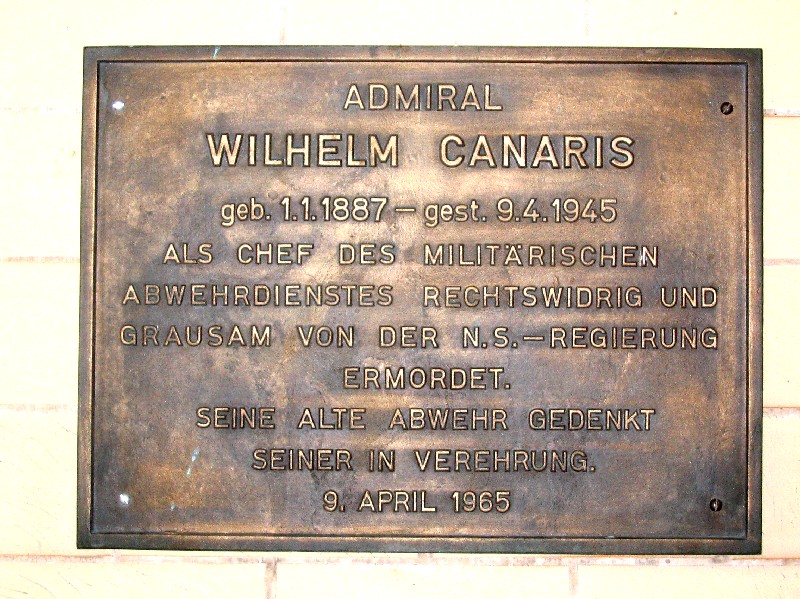
»German Intelligence Chief Wilhelm Franz Canaris24/01/19 06:17 from Mike Nova’s Shared NewslinksMichael_Novakhov shared this story from Warfare History Network. Adolf Hitler’s spymaster, Admiral Wilhelm Canaris, was actually a dedicated anti-Nazi who did everything he could to frustrate the Führer’s plans. by David…
»Canaris and Heydrich – Axis History Forum24/01/19 06:16 from Mike Nova’s Shared NewslinksMichael_Novakhov shared this story . Canaris and Heydrich #1 Post by Ezboard » 29 Sep 2002, 21:37 GFM2001 Member Posts: 55 (8/20/01 12:32:55 pm) Reply Canaris and Heydrich ————————————————————…
»Service record of Reinhard Heydrich24/01/19 05:43 from Mike Nova’s Shared NewslinksMichael_Novakhov shared this story . SS- service record cover of Obergruppenführer und General der Polizei Reinhard Heydrich The service record of Reinhard Heydrich was a collection of official SS documents maintained at the SS Pers…
»Heydrich’s homosexuality? – Axis History Forum24/01/19 04:52 from Mike Nova’s Shared NewslinksMichael_Novakhov shared this story . Heydrich’s homosexuality? #1 Post by Ezboard » 29 Sep 2002, 19:03 HannahR New Member Posts: 1 (5/26/01 5:43:01 pm) Reply Heydrich’s homosexuality? ————————————————…




 Trump Investigations.



Comments
Post a Comment